Tags / party

"party"

26 BuzzVerdicts across Board Games (25), Mobile Games (1)

Blood on the Clocktower

4.4

2022 · 5-20 Players · 30-120 min · Social Deduction / Party

Blood on the Clocktower is the most sophisticated social deduction game available, solving the genre's deepest problems while creating new possibilities for drama, deduction, and memorable moments. The price of entry is high in both money and preparation, and the experience depends heavily on who runs it. For groups willing to invest in a dedicated Storyteller and gather enough players, nothing else in the genre comes close to what happens around this table.
Crokinole

4.4

1876 · 2-4 Players · ~30 min · Competitive

Crokinole is the rare game that's been around for nearly 150 years because nothing has improved on the formula. Flicking wooden discs into a shallow dish while trying to knock your opponent's pieces off the board is immediately understandable and endlessly replayable. The skill ceiling is remarkably high for something so simple, and the moment-to-moment tension of each flick creates excitement that complex strategy games often can't match. The board itself is the only real barrier to entry, since quality matters and quality costs money, but if you can get one, Crokinole earns its place as one of the finest two-player competitive experiences ever designed.

The Resistance: Avalon

4.3

2012 · 5-10 Players · ~30 min · Competitive / Social Deduction / Hidden Roles

The Resistance: Avalon remains one of the definitive social deduction games for a reason. The Merlin role elevates the formula from simple bluffing into a layered game of information management that rewards both careful reasoning and bold performance. It needs the right player count and the right group to shine, and quieter players can get lost in the chaos. But when the table is full and everyone is invested, the arguments, accusations, and betrayals it generates are as good as anything in the genre.

Monikers

4.2

2015 · 4-16 Players · ~30-60 min · Party / Team

Monikers takes the ancient bones of charades and celebrity and turns them into something consistently hilarious through one elegant trick: the same cards carry through all three rounds, building a shared comedy vocabulary that makes the final silent round genuinely brilliant. It needs at least six people to work, it can run long with bigger groups, and some cards lean hard into adult humor that won't land for everyone. But when it clicks, and it usually does, few party games generate this many genuine laughs per minute.

KLASK

4.1

2014 · 2 Players · ~10 min · Competitive

KLASK captures the frantic energy of air hockey and foosball in a compact wooden board controlled by magnets underneath, and the result is one of the most immediately fun two-player experiences in tabletop gaming. The tiny magnetic obstacles add a layer of chaos that keeps skilled players honest and newcomers competitive. It has no strategic depth to speak of and lives or dies on whether you enjoy physical dexterity games, but for what it sets out to do, KLASK does it about as well as anything on the market.

Skull King

4.0

2013 · 2-6 Players · ~30-45 min · Competitive

Skull King takes the classic trick-taking formula and wraps it in a pirate theme that actually matters, turning bid prediction into a tense and frequently hilarious experience. The escalating round structure builds beautifully from simple one-card decisions to chaotic ten-card showdowns, and the special card hierarchy adds just enough spice to keep even experienced card players on their toes. Scoring can feel convoluted at first, and the luck factor means your best-laid plans will sometimes sink without a trace. For groups that enjoy controlled chaos at the card table, this is one of the best trick-takers available.

Junk Art

4.0

2016 · 2-6 Players · ~30 min · Competitive

Junk Art stands apart from the crowded dexterity genre by offering more than ten distinct game modes that change how players draft, stack, and score from round to round. The wooden pieces are wonderfully awkward, creating genuine tension and laugh-out-loud moments as structures grow taller and less stable. Some players will find the core experience too simple beneath all the variety, and production quality matters more here than in most games. For groups that want a physical, social, accessible game that plays differently every time it hits the table, Junk Art delivers in a way few competitors can match.

So Clover!

4.0

2021 · 3-6 Players · ~30 min · Cooperative

So Clover! takes word association and wraps it in a cooperative puzzle that feels fresh every time. Writing clues that link two random words is the kind of challenge that rewards creative thinking without punishing casual players, and the deduction phase where your team tries to reconstruct your board creates genuine tension from almost nothing. It's lighter than Codenames and friendlier than most word games, which makes it easy to get to the table but occasionally too breezy for groups wanting more bite. For a 30-minute cooperative word game, though, it's hard to beat.

Cockroach Poker

4.0

2004 · 2-6 Players · ~15-25 min · Competitive

Cockroach Poker strips bluffing down to its absolute essentials and somehow ends up with more tension than games ten times its size. With the right group, every card pass becomes a miniature psychological battle that produces the kind of laughter you can hear from the next room. It stumbles when players get targeted repeatedly, and it won't satisfy anyone looking for strategic depth. But for a game that costs less than lunch and fits in a pocket, it punches absurdly far above its weight. Keep it in rotation as a warm-up or cooldown and it'll never wear out its welcome.

Skull

4.0

2011 · 3-6 Players · ~30 min · Competitive

Skull strips bluffing down to its skeleton and finds that the skeleton is the whole game. Four discs per player, one of them dangerous, and a bidding system that forces you to eat your own bluffs before testing anyone else's. It's poker compressed into fifteen minutes, with the same reading of faces and the same thrill of a called bluff, but without the hours of chip management. Three players feels thin, and groups that don't enjoy lying to friends' faces should look elsewhere. For everyone else, Skull is one of the purest social games ever designed, and one of the cheapest.

Among Us

4.0

2018 · Social Deduction

Among Us remains one of the best social deduction games ever made for mobile, and it costs nothing to try. The core loop of deception, accusation, and betrayal is endlessly entertaining with the right group. Public lobbies and long-term repetition hold it back from greatness, and the game lives or dies based on who you play with. Grab a few friends, hop on a voice call, and you'll understand why half a billion people downloaded this thing.

Secret Hitler

4.0

2016 · 5-10 Players · ~45 min · Competitive / Social Deduction / Hidden Roles

Secret Hitler takes the social deduction formula and builds a political simulation around it that creates tension, drama, and betrayal in roughly equal measure. The government formation mechanic gives every round a structural backbone that pure discussion games lack, and the escalating executive powers keep the pressure building right up to the finish. The theme will be a dealbreaker for some tables, and the game needs seven or more players to hit its stride. But for groups that can field the numbers and handle the subject matter, this is one of the strongest entries in the genre.

Mysterium Park

3.8

2020 · 2-7 Players · ~30 min · Cooperative

Mysterium Park takes the core experience of its predecessor and strips it down to a faster, more accessible package without losing what made the original work. The asymmetric ghost-and-psychic dynamic still produces hilarious miscommunications and triumphant breakthroughs, and the streamlined setup means it actually gets to the table. Vision card ambiguity can frustrate groups that want clearer communication, and the reduced atmosphere compared to the original is a real trade-off. For anyone looking for a cooperative deduction game that plays in 30 minutes and welcomes players of all experience levels, this is one of the best options available.

Challengers!

3.8

2022 · 1-8 Players · ~45 min · Competitive

Challengers! reinvents the tournament format for board games, running simultaneous one-on-one card duels across multiple rounds where you draft new team members between matches. The auto-battler combat removes decision-making during fights, which sounds boring but actually creates hilarious tension as you watch your cobbled-together team succeed or fail spectacularly. It plays up to eight with zero added downtime and generates more laughing and groaning per minute than games twice its complexity. The lack of combat decisions means strategy lives entirely in the drafting.

Telestrations

3.8

2009 · 4-8 Players · ~20-30 min · Cooperative / Party

Telestrations is the board game version of telephone meets Pictionary, and the results are almost always hilarious. Players alternate between drawing a word and guessing what the previous person drew, passing their sketchbook around the table until the original prompt has been gloriously mangled. Bad artists make the game better, not worse, and the laughter it generates is more genuine than almost any other party game on the market. Scoring is pointless and everyone knows it, the components could be better, and you need at least six people for the full effect, but when Telestrations works, nothing else in the hobby produces this much pure joy.

Citadels

3.8

2000 · 2-8 Players · ~30-60 min · Competitive

Citadels is a classic card game that turns role selection into a tense bluffing contest, and it's held up remarkably well for over two decades. The character draft is where the real game lives, and it rewards reading your opponents as much as planning your own moves. Higher player counts introduce downtime that can drag the experience down, and the take-that elements will rub some groups the wrong way. But for four or five players who enjoy getting into each other's heads, Citadels remains one of the most accessible and replayable bluffing games around.

Love Letter

3.8

2012 · 2-6 Players · ~20 min · Competitive

Love Letter is one of the most efficient designs in all of tabletop gaming, packing real decisions and social tension into a deck you can fit in your pocket. Its blend of deduction, bluffing, and push-your-luck works best at three or four players, where there's enough information to reason with but enough chaos to keep things exciting. The luck factor and player elimination will bother some groups, and the game does lose its shine at two. But as a five-minute opener, a restaurant time-killer, or a palate cleanser between heavier games, very few titles do it better.

Bohnanza

3.8

1997 · 2-7 Players · ~45 min · Competitive / Negotiation

Bohnanza takes a deck of bean cards and a single clever constraint and builds one of the best trading games ever designed. The negotiation is lively, the rules are minimal, and the right group will generate stories you'll reference for years. It falls apart with quiet or indecisive players, and the two-player variant barely resembles the real game. Bring it to a group that likes to talk, haggle, and occasionally betray each other over coffee beans, and you'll understand why it's lasted nearly three decades.

Captain Sonar

3.8

2016 · 2-8 Players · ~45-60 min · Team vs Team / Real-Time / Deduction

Captain Sonar is one of the most unique experiences in board gaming, a real-time submarine hunt that turns a table of eight players into two crews working in frantic coordination against each other. When it clicks, the combination of deduction, communication, and pressure creates a level of immersion that almost no other tabletop game can match. The steep player count requirement and the fact that not every role is equally exciting keep it from being a game most groups can play regularly. But for the rare session where eight willing players show up ready for something loud, fast, and completely unlike anything else on the shelf, Captain Sonar is unforgettable.

Coup

3.8

2012 · 2-6 Players · ~15 min · Competitive / Bluffing / Social Deduction

Coup distills bluffing and social deduction down to their purest form, wrapping the whole experience in a package that fits in a pocket and plays in fifteen minutes. The speed and simplicity mean that player elimination never stings for long, and the table talk between rounds is often where the real game lives. Randomness and a reliance on reading people mean it won't click for everyone. But for groups that enjoy lying to each other's faces over low stakes, few games do it better for the price.

Sheriff of Nottingham

3.8

2014 · 3-6 Players · ~60 min · Competitive / Bluffing / Negotiation

Sheriff of Nottingham is a bluffing and negotiation game that produces some of the funniest, most memorable moments in tabletop gaming when played with the right group. The social mechanics are brilliantly designed, turning every bag snap into a moment of tension, hilarity, or both. Its total dependence on group energy means it can fall flat with quiet or uncomfortable players, and the game length at higher counts can stretch past what the mechanics justify. But for groups that love talking, lying, dealing, and laughing at each other across a table, Sheriff of Nottingham is one of the best games in its category.

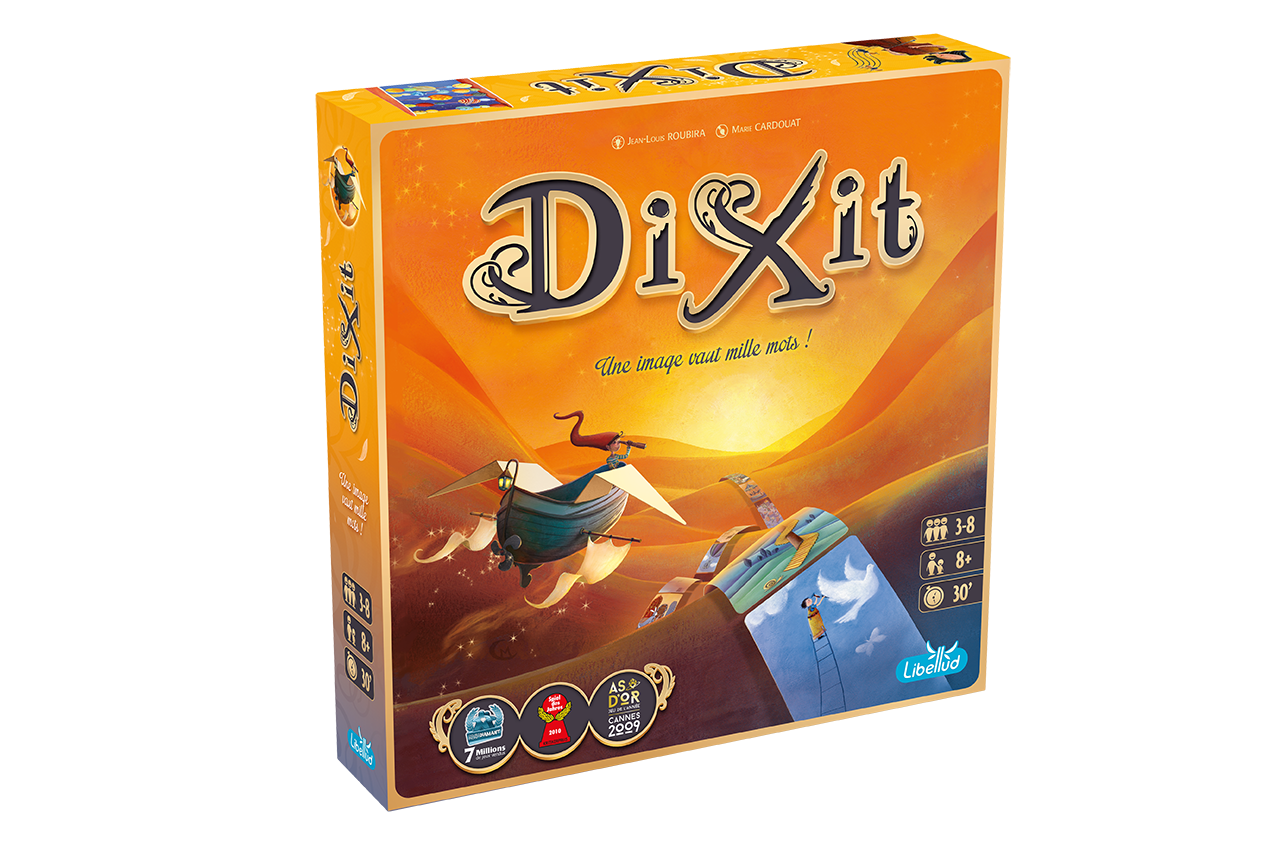
Dixit cover

Dixit

3.5

2008 · 3-8 Players · 30 min · Competitive / Party

Dixit turns abstract art into a guessing game powered by imagination, and the result is one of the most accessible and inviting party games of the past two decades. It rewards creativity over strategy and social familiarity over raw skill, which makes it sing with the right group and fall flat with the wrong one. Card repetition and limited depth keep it from being a game you reach for every week, but when the table clicks, nothing else in the party game space quite matches the feeling. For families and friend groups looking for something warm, creative, and refreshingly different, Dixit earns its Spiel des Jahres.

King of Tokyo

3.5

2011 · 2-6 Players · ~30 min · Competitive / Dice Rolling

King of Tokyo is a fast, loud, dice-chucking brawl that works best when nobody at the table is looking for depth. Richard Garfield built a game that teaches in minutes, plays in thirty, and generates the kind of table moments that stick with families and casual groups for years. Luck runs the show more than most players would like, and the absence of unique monster abilities leaves the base game thinner than it could be. For groups who want a lightweight opener or a rowdy filler between heavier games, it delivers exactly what the box promises.

Mysterium

3.5

2015 · 2-7 Players · 42 min · Cooperative / Deduction

Mysterium is a cooperative guessing game wrapped in gorgeous, haunting artwork that creates genuinely memorable moments when the table clicks. Its core concept of silent communication through surrealist vision cards remains clever and distinctive, even a decade after release. Structural rough edges in the finale and limited card variety hold it back from greatness, but at its best with four or five players, few games generate the same mix of laughter, confusion, and triumph. It belongs in collections that value social experience over strategic depth.

The Mind

3.3

2018 · 2-4 Players · ~20 min · Cooperative

The Mind is one of the strangest card games ever designed, and that strangeness is exactly what makes it memorable. Its no-communication rule creates moments of real tension and collective triumph that more complex games struggle to produce. Limited replayability and the ongoing debate about whether it qualifies as a game at all keep it from broader appeal. But as a short, sharp social experience that can turn a quiet table into a room full of cheering, it punches well above its modest card count.